
3 Days in Bordeaux: A Local-Approved Guide to the City
There's a particular kind of trip that happens when you visit a city with friends who actually live there. Not the guidebook version, not the tourist trail, but the real rhythm of the place: where locals eat on a Tuesday night, which square fills up with people in the evening, which museum is actually worth your time. That's what this itinerary is.
My girlfriends Nath and Lola have been living in Bordeaux for years, and three days with them recalibrated everything I thought I knew about this city. What follows is their version, filtered through my own experience of the trip. If you follow it, you will eat well, drink very well, and leave with a genuinely accurate sense of what Bordeaux is.
Before you arrive: one rule
Kitchens close sharply after lunch service here. Be seated by 2pm at the absolute latest, and 1:30pm is safer. This is not Barcelona where lunch stretches to 4pm. They mean it, and they will turn you away. Plan around this and everything else will be fine.
Day One: The Old City and the Quays
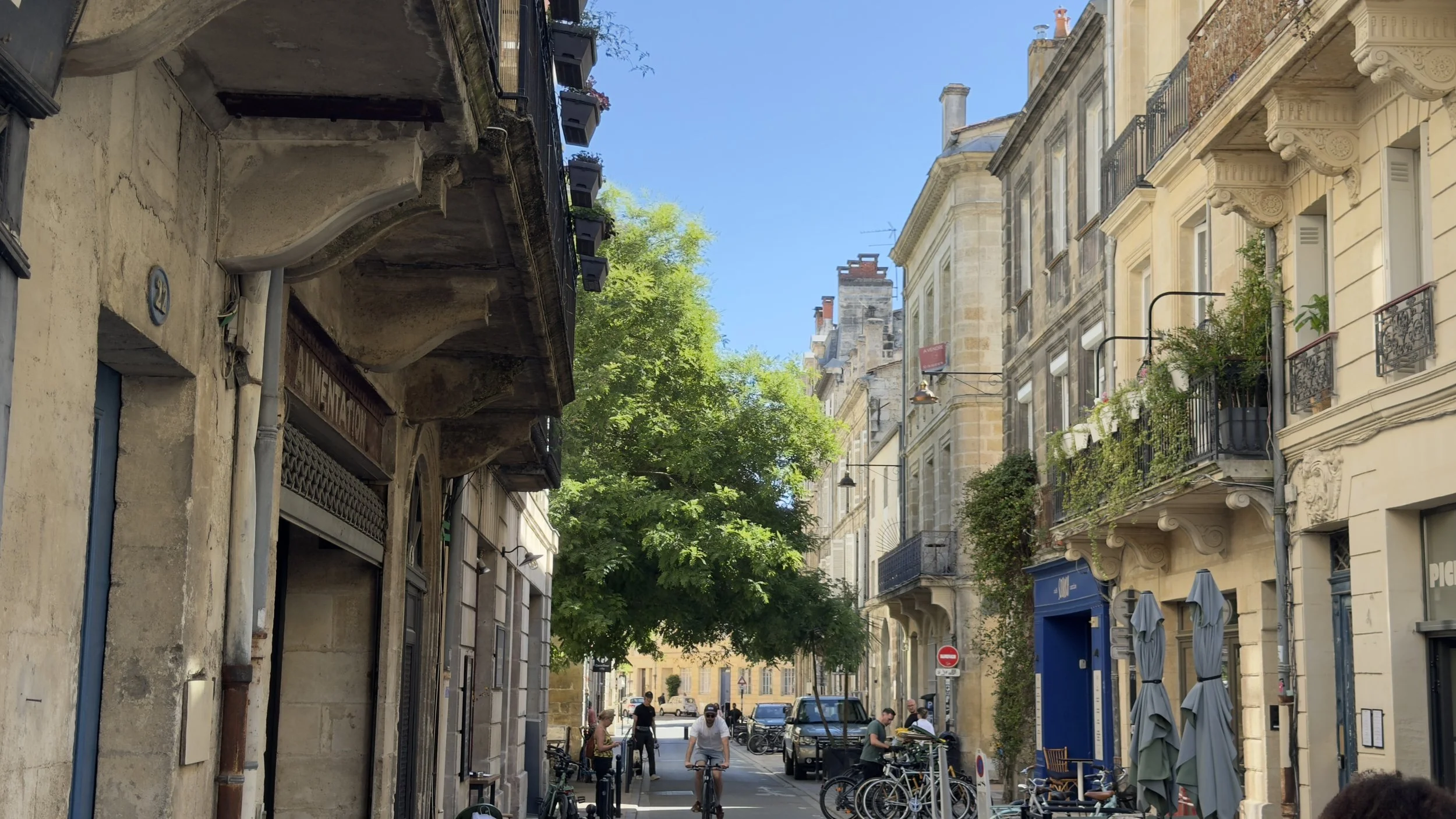
I fell in love with these charming streets, cafes, nice people, thrifting at the many ‘brocantes’.. I could go on and on.
Start where the city reveals itself most immediately: the quays along the Garonne. The riverside promenade is one of the great urban walks in France, and it's best done in the morning before the heat builds. The light on the water is good early, the joggers are out, and the city has a particular calm before the tourist footfall picks up.
The Place de la Bourse sits along these quays and earns its reputation. The mirrored reflecting pool in front of it is the image of Bordeaux that appears in every photograph, and seeing it in person explains why. Go before 10am if you want it relatively to yourself.
From the quays, head into the old city. The Place des Quinconces is one of the largest city squares in Europe and functions as the kind of open space a city needs to breathe. It hosts festivals, markets, and fairground events depending on the season, and the two tall columns at the Garonne end are worth a look. It's more of a through-point than a destination, but spending five minutes understanding its scale helps you understand how the city is laid out.
The Grand Théâtre, just south of the Quinconces, is one of the finest neoclassical theatre buildings in Europe. It opened in 1780 and the façade is extraordinary: twelve Corinthian columns running the full width of the building, statues of the muses along the roofline. You can visit the interior on guided tours if architecture interests you. Even if it doesn't, stand in front of it.
The Rue Sainte-Catherine runs south from here and is the city's main shopping artery, comically long and genuinely useful if you need anything from high street to independent. Dip off it in any direction for something more interesting.
Lunch: Pickles, the natural wine-forward spot with a menu that moves with what's available. Good food, the right kind of room. Get there by 1pm.
Afternoon: walk to the Chartrons neighbourhood. This was historically Bordeaux's wine merchant quarter, the place where the négociants ran the trade for centuries, and it still has a particular character. Long streets of elegant townhouses, antique dealers, the Sunday flea market on the quays. It's the neighbourhood with the most concentrated good eating and drinking in the city and the one I'd prioritise.
The Place des Chartrons is the small square at the heart of it: café terraces, bars, the Halle des Chartrons behind it, locals filling the tables from late afternoon. If you're in Bordeaux on a summer weekend evening, walk here and follow any sound you hear coming from the square. Pop-up wine events, outdoor music, the whole neighbourhood using its public spaces exactly as public spaces should be used. We walked into one completely by accident on our last night and stayed two hours.
Evening aperitivo: Le Sobre Chartrons, the wine bar in the heart of the neighbourhood with a 4.9 on Google Maps and nearly 500 reviews. My partner, who knows his wine, was satisfied. That is not a small thing. Or Bermeo, just off the Place du Marché Chartrons, which locals have quietly claimed for themselves.
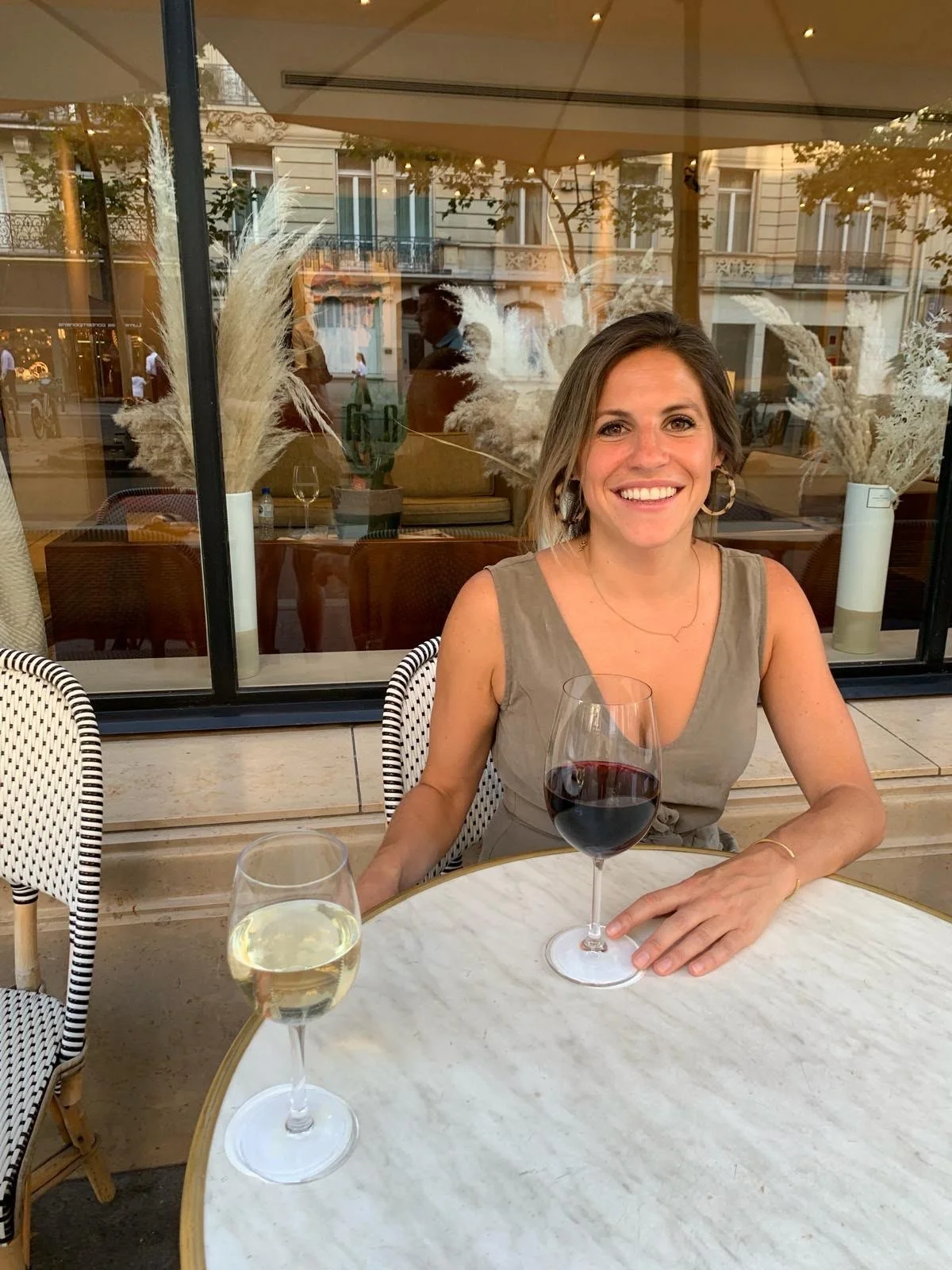
Had to get both ‘flavors’ because I couldn’t decide ;)
Dinner: Zinc Bordeaux. Book ahead. The food is excellent in a way that looks effortless and isn't, the team is genuinely warm, and at the end of the meal they brought our table a chupito de la casa for no particular reason. There was a DJ, the room had energy, and we stayed far longer than we planned. If you book one dinner in Bordeaux, book this one.
Day Two: La Cité du Vin and a Slow Morning
Take the morning gently. Walk or run the quays if you want the exercise. The stretch from the Chartrons down toward the Pont de Pierre is long enough to feel like proper movement and the river in the morning is a good place to be.
La Cité du Vin opens at 10am and deserves most of your day if wine means anything to you, and even if it doesn't, the building alone justifies a visit. It's a wave of glass and gold curving above the waterfront, genuinely one of the most distinctive pieces of architecture built in France this decade. Inside, the permanent collection covers the history and culture of wine in an immersive way: sensory stations, filmed content, beautiful object displays. It's well-designed and doesn't talk down to its visitors.
Crucially: your entrance ticket includes one drink on the rooftop belvedere. A glass of Bordeaux, views across the river and the city, late morning or early afternoon. This is the best thing included in a museum ticket anywhere I can think of. Take your time up there.
The Musée du Vin et du Négoce is a smaller option if you want the specifically Bordelais commercial history: how the wine trade built the city, the centuries of merchant activity that ran through the Chartrons. It's in a Chartrons cave and pairs well with a walk through the neighbourhood and a stop at Le Sobre afterwards.
Afternoon: the Jardin Public, which is a ten-minute walk from Chartrons. This is not a tourist attraction dressed up as a park. It's a city park that Bordeaux actually uses: wide paths, tall trees, families, old men, dogs, the particular atmosphere of a place that belongs to its neighbourhood. We spent two hours there one afternoon, found a good patch of grass, and napped. I left it a five-star Google review specifically for napping quality.
Evening: aperitivo at La Guinguette Sur Le Toit, the rooftop tapas bar with views over the neighbourhood. Good wine, the right early evening energy. Then back to the Chartrons for dinner at Chez Dupont, the proper French restaurant with a long reputation and a room that feels like it's been there forever. Classic, without being stiff.
Day Three: Out of the City
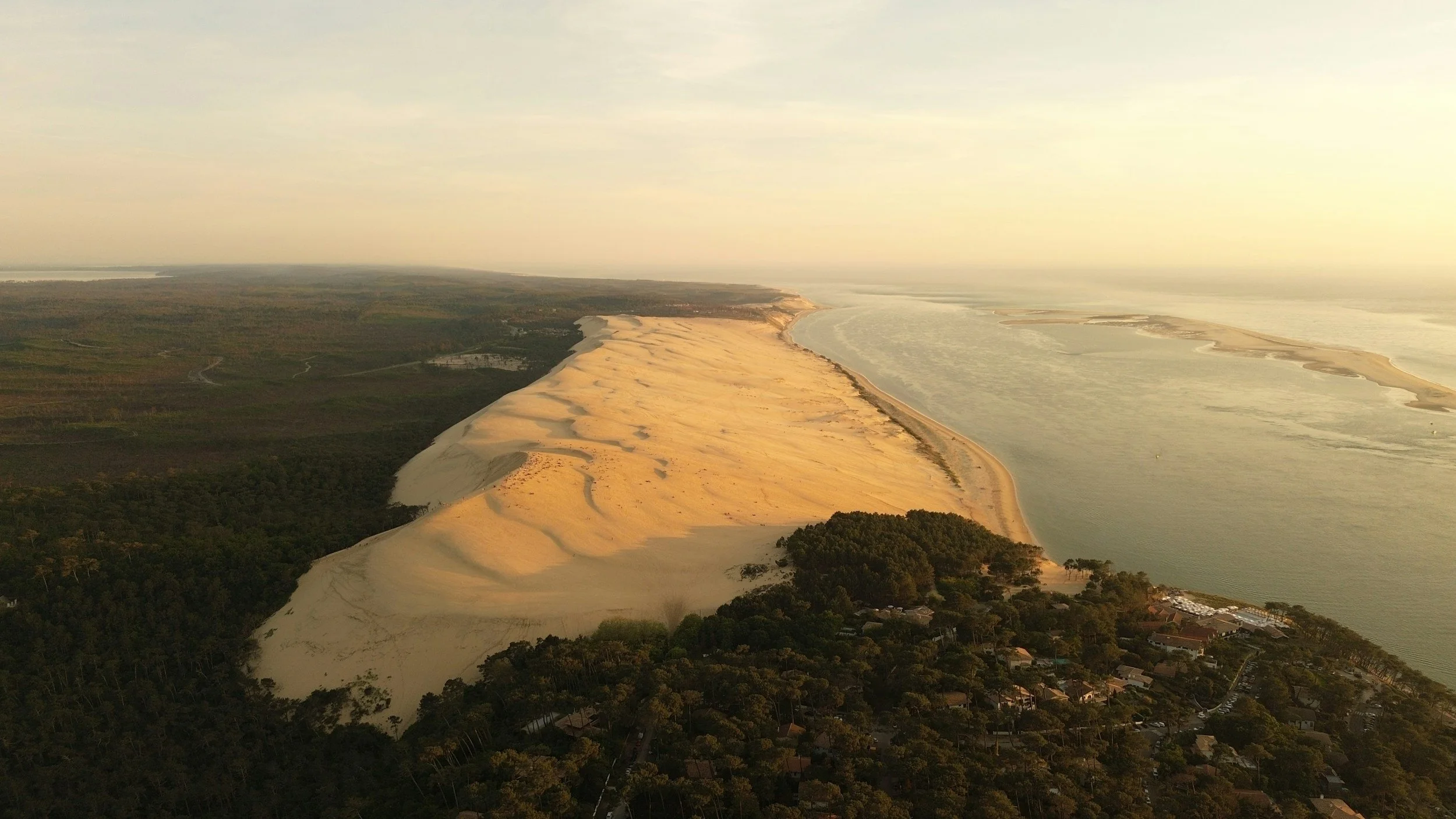
Dune du Pilat is truly magical - if you can find a way to get there for sunset and sipping on top of a dune it’s VERY worth it.
Bordeaux makes day trips easy. Two options, both worth it, both about the same distance.
Saint-Émilion is forty minutes by car to the east. The town sits on a limestone plateau and the approach from the valley, looking up at the terracotta rooftops and the church spire with vineyards running right to the walls, is one of those views that stops the car. Walk the village, pick up the tasting map from the tourist office, and go from estate to estate on foot. Château Fonroque is biodynamic and does the tasting experience well. Château La Dominique has a restaurant with views over the Pomerol plateau.
The train alternative: Bordeaux Saint-Jean to Libourne is twenty minutes, then taxi or rideshare to Saint-Émilion. There's a tourist train in summer from Libourne that is slightly silly and entirely functional.
Arcachon is forty-five minutes southwest. The Arcachon Bay produces some of the finest oysters in the world, and eating them an hour from where they were pulled, at one of the wooden cabanes ostréicoles along the water at Gujan-Mestras with a glass of Bordeaux Blanc, is one of those simple things that earns a disproportionate place in the memory. We mentioned the oysters in passing in Bordeaux and it is worth saying directly: they are extraordinary.
The Dune du Pilat is just south of Arcachon: 106 metres high, three kilometres long, one of the most genuinely surreal natural landscapes in France. Climb it in the late afternoon. The view from the top, pine forest on one side and the Atlantic on the other, doesn't translate to photographs. Go anyway. This has been one of my FAVORITE highlights of this region of the years.
Both options are best by car. Arcachon is reachable by train (fifty minutes from Bordeaux Saint-Jean). Saint-Émilion requires the Libourne connection.
Where to Stay in Bordeaux
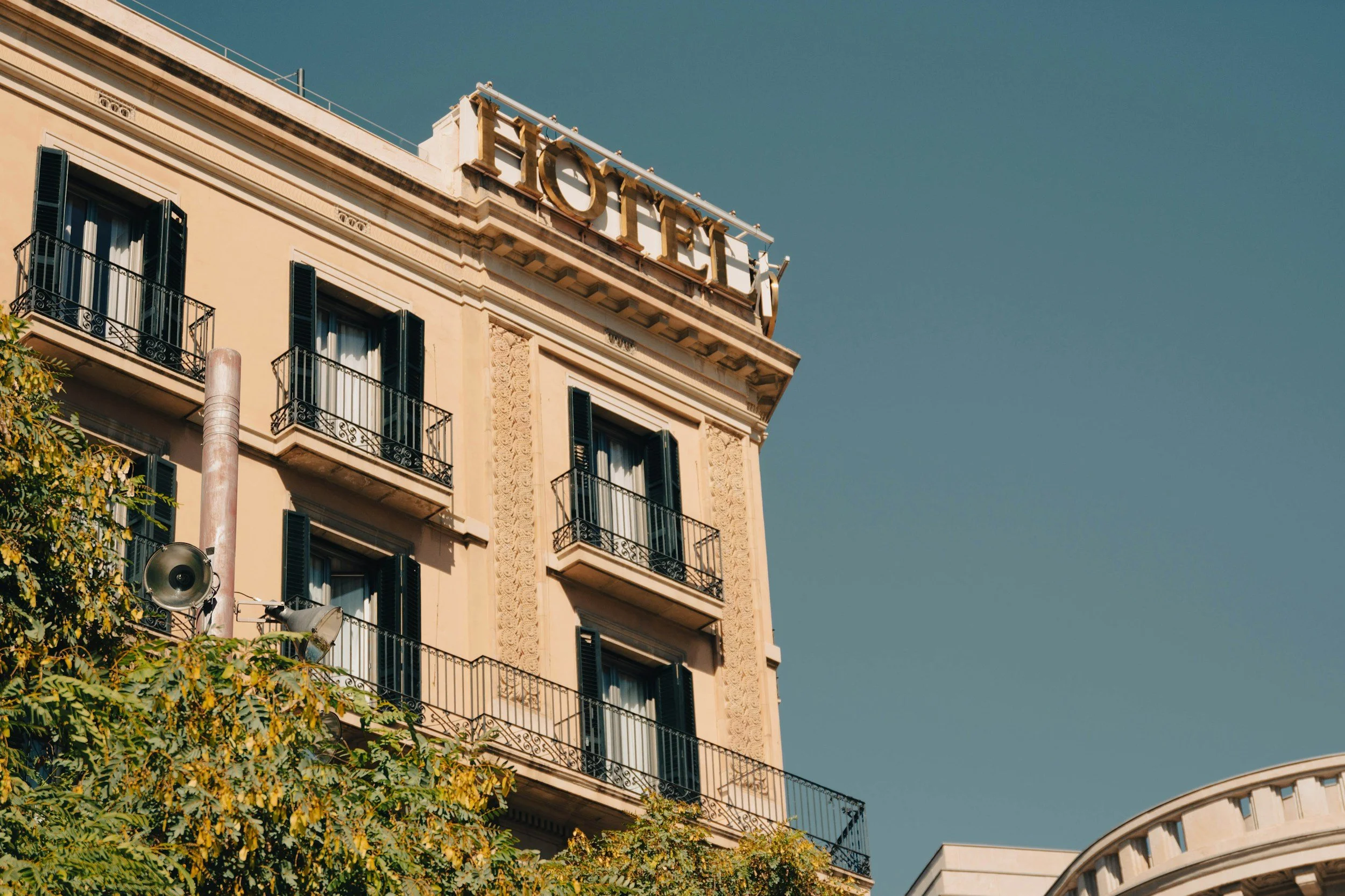
My top five recommendations and links below:
The best areas to base yourself are the old city (Saint-Pierre and around the Grand Théâtre) for walkability to all the major sights, and Chartrons if you want to be in the neighbourhood with the best eating and drinking. Both are central and both work.
InterContinental Bordeaux – Le Grand Hôtel The grandest option and a genuinely spectacular building. It sits directly on the Place de la Comédie opposite the Grand Théâtre, which means the architecture you wake up next to is exceptional. This is the choice if you want the full Bordeaux experience at the highest level. Book on Booking.com
Hotel de Sèze Elegant, central, within easy walk of the Grand Théâtre, the Quinconces, and the Chartrons. Well-regarded for service, the kind of hotel that feels properly Bordelais without needing to make a statement about it. Book on Booking.com
La Cour Carrée A beautiful boutique hotel in the Saint-Pierre quarter, which is as good a location as the city offers. Small, well-designed, the kind of place that feels like a discovery rather than a booking. Book on Booking.com
Mama Shelter Bordeaux More fun in feel, design-forward, with a rooftop bar that works well as a pre-dinner stop. A good choice if you want energy over grandeur and a place that suits a group trip or a younger crowd. Book on Booking.com
Hôtel Burdigala A reliable four-star in the Mériadeck quarter, well-connected to the old city, with a loyal return clientele. Quieter in feel than the central properties, good if you want a bit of distance from the busiest streets without losing convenience. Book on Booking.com
One last thing: Bordeaux in summer will surprise you with what happens in its squares after dark. Don't over-programme the evenings. Leave room to follow the music.