
The Best Music Festivals in Europe This Summer — A Musician's Guide to 2026
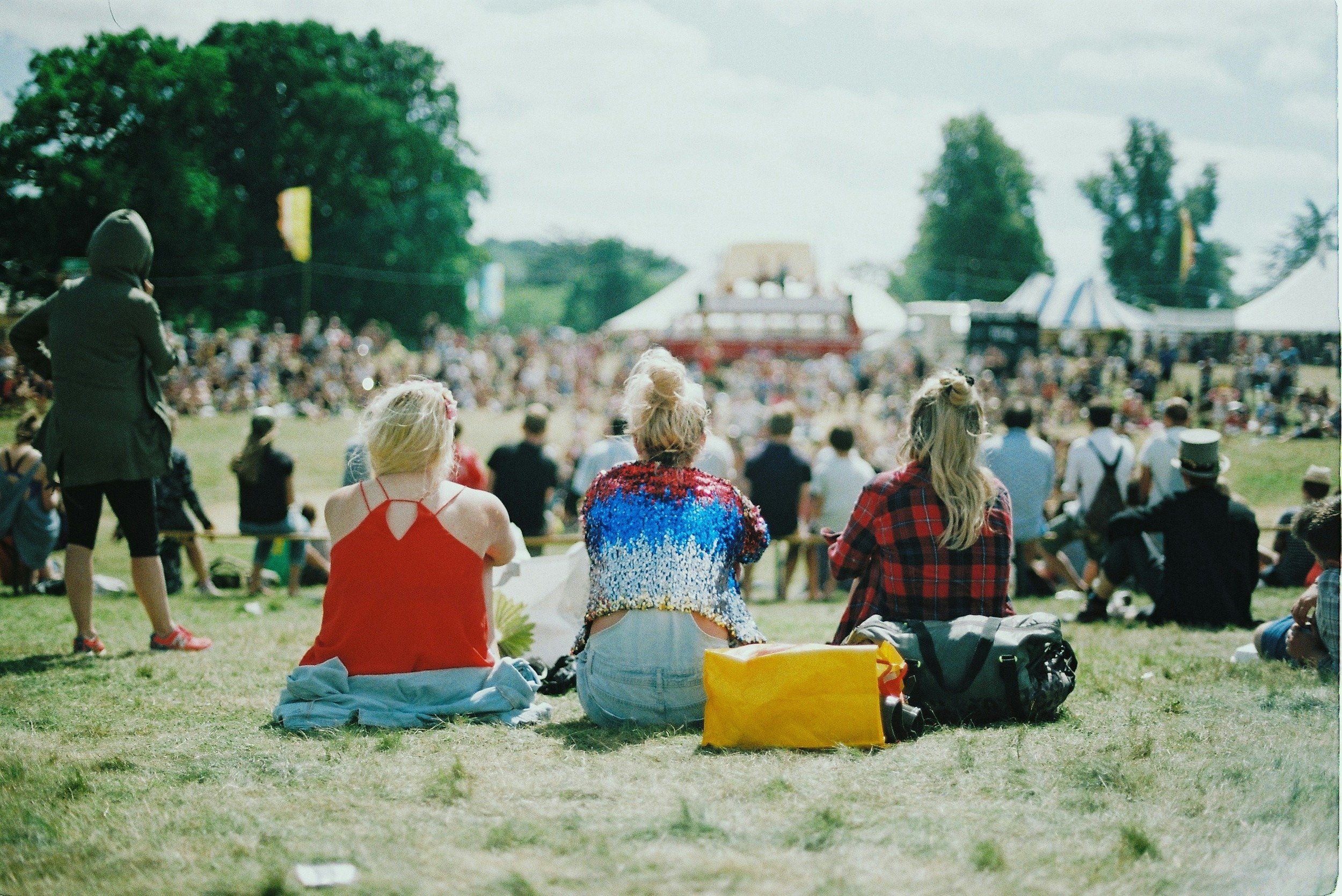
Summer 2026 is shaping up to be one of the most loaded festival seasons in years.
Glastonbury is back after its fallow year, which means the appetite for festivals across Europe is at a particular pitch — the kind of summer where everyone seems to have a trip planned and every lineup feels like it's competing harder than usual. As a musician who lives for this stuff, and as someone who has spent years watching these events from both the audience and the stage side, here's my honest guide to the ones worth building a trip around.
I've written this from a musician's perspective — which means I'm not just looking at who's headlining, but at what the experience actually gives you: the discovery potential, the atmosphere, the way the programming tells you something about what's happening in music right now, and which ones feel like more than a branded weekend in a field.
Glastonbury — Worthy Farm, Somerset, England
June 24 to 28
After its fallow year in 2025, Glastonbury returns to Worthy Farm in Somerset for what promises to be one of the most eagerly anticipated editions in the festival's 55-year history.
There is nothing quite like Glastonbury in a comeback year. The emotional charge is real, the lineups always feel elevated to match the occasion, and the sense of a community returning to a place it loves is something you genuinely feel on site. Glastonbury is not just a music festival in the way most of them are — it's a temporary city, a political statement, a rite of passage, and occasionally a legendary mud bath. For musicians especially, there is something clarifying about seeing how music functions at that scale — how it connects people, how it changes the atmosphere of a field, how the stages that feel most alive are rarely the biggest ones.
This is the one I'd tell anyone to experience at least once in their life. A comeback year is the right time.
Best for: people who want the full festival-as-cultural-event experience. Everything, everyone, five days.
Roskilde — Roskilde, Denmark
June 27 to July 4
Often mentioned in the same breath as Glastonbury, Roskilde is Northern Europe's biggest music festival, dating back to 1971, with eight days of music and a 2026 lineup that includes The Cure, Gorillaz, Addison Rae, and Zara Larsson. Sziget Festival
What makes Roskilde interesting from a music perspective is its programming philosophy — it doesn't reduce itself to one sound or one audience. It's genuinely eclectic, genuinely curated, and has a Scandinavian seriousness about discovery and cultural programming that sets it apart from the more commercially driven festivals. The Cure on a Roskilde night is going to be something. Gorillaz at that scale in Denmark in summer is going to be something. And then there are the acts below the headline that are often the most interesting.
For musicians who want to understand how festival culture works at the serious end, Roskilde is worth the trip.
Best for: music people who want depth of programming alongside the big names. A proper festival culture, not just a lineup.
Tomorrowland — Boom, Belgium
July 17 to 19 and July 24 to 26
Tomorrowland returns across two weekends with Calvin Harris making his debut at the festival, Martin Garrix, David Guetta, Fisher, Hardwell, John Summit, Chase and Status, Armin van Buuren, Sara Landry, and more than 500 artists across 16 stages. The 2026 theme is Consciencia, threading a narrative arc across stages and installations. Songkick
My partner is Belgian and has long-standing connections to the European electronic music world, which means I have a particular lens on Tomorrowland — both as a cultural institution and as a production exercise. This is the most spectacular electronic festival in Europe from a pure production standpoint, and it creates something genuinely immersive in a way most festivals don't attempt. The staging, the storytelling, the design — it's ambitious in a way you either find overwhelming or magnificent.
For musicians who work in or around electronic music, Tomorrowland is worth seeing at least once — not just as an audience experience, but as an education in what production at that level actually looks like.
Best for: electronic music fans, production nerds, people who want the most spectacular festival experience in Europe.
Primavera Sound — Barcelona
June 3 to 7 (already happened this season — but it belongs on this list for planning next year)
Primavera Sound 2026 featured The Cure, Doja Cat, The xx, Gorillaz, and Massive Attack across the Parc del Fòrum on Barcelona's Mediterranean seafront, sold out for the second consecutive year. Music Festival Wizard
I live in Barcelona and Primavera is the festival that shapes the city's entire early summer. It's the one I follow most closely and the one I'd most recommend to a musician who hasn't been — not just for the headliners but for the curation. Primavera has always been serious about discovery, about programming artists who are doing interesting things rather than just the biggest names, and about creating a festival that feels like it's made by people who genuinely care about music rather than just scale.
The city backdrop helps too. Having Barcelona around you while the festival is happening — the beach, the restaurants, the late nights that extend naturally into the city — creates a completely different experience to a field festival.
Best for: indie, alternative, and genre-fluid music lovers who want the full city-festival combination. Add it to 2027's list now.
Sziget — Budapest, Hungary
August 11 to 15
Sziget 2026 takes place on Óbuda Island in the Danube with a lineup including Twenty One Pilots, Florence and the Machine, Bring Me the Horizon, Lewis Capaldi, Jorja Smith, Zara Larsson, Skepta, Underworld, Wolf Alice, and Tash Sultana across five days. Catalan News
Sziget is the festival that consistently earns its reputation for doing the city-festival combination better than almost anyone. You're on an island in the middle of Budapest, one of Europe's most underrated and genuinely beautiful cities — and at the end of each day you can walk into ruin bars, thermal baths, and one of the best value city break experiences on the continent.
From a musician's perspective, Sziget is interesting because it programs with genuine breadth. The lineup above spans pop, rock, indie, electronic, and leftfield in a way that feels coherent rather than scattershot. It's a festival that wants to be everything to everyone and largely gets away with it.
Best for: people who want the festival and a proper city experience combined. Five days, multiple genres, Budapest in August.
Isle of Wight Festival — Isle of Wight, England
June 18 to 21
The 2026 Isle of Wight Festival features The Cure, Calvin Harris, and Wet Leg among the headline acts, with a weekend ticket priced at £320. Budapest
The Isle of Wight has a particular quality that I always come back to: the island itself changes the festival. The ferry crossing gives it a sense of arrival and departure that a drive to a field doesn't have. You feel like you've gone somewhere specific. The scale is more intimate than Glastonbury and the crowd tends to be genuinely there for the music rather than the experience of being at a festival. The Cure headlining is a particularly compelling reason to go in 2026 — Robert Smith at this point in their career, at this scale, in that setting, is something I'd prioritise.
Best for: people who want a mid-size UK festival with genuine personality, without the Glastonbury scale and logistics.
Untold — Cluj-Napoca, Romania
August (dates TBC)
Untold 2026 at Cluj Arena features Martin Garrix, Kygo, Marshmello, Lewis Capaldi, Zara Larsson, Steve Aoki, and Lost Frequencies, voted Best Major Festival at the European Festival Awards and ranked third globally by DJ Mag. Rave Bonfire
The reason Untold belongs on this list is partly the lineup and partly the value. You're getting a production level that rivals the biggest western European festivals at a price point that's significantly lower, in a city — Cluj-Napoca, in the heart of Transylvania — that is genuinely worth the trip in its own right. For musicians from more expensive countries, this is one of the best-kept secrets in the European festival circuit.
Best for: electronic and pop fans who want a high production festival at better value, with a city worth exploring.
A Few More Worth Knowing
Rock in Roma, Italy (June to August) — Rather than concentrating all concerts into a single weekend, Rock in Roma unfolds over nearly two months at the open-air Ippodromo delle Capannelle racecourse, combining world-class live music with warm Roman summer nights. The Colosseum in the afternoon, the show in the evening. For musicians who love the idea of a concert experience embedded in a city. Frontstage
Lollapalooza Berlin (September) — The Olympic Park venue has history and the city is extraordinary. For anyone who wants electronic and alternative in Berlin's specific cultural context.
Amsterdam Dance Event (October 21 to 25) — The 2026 edition marks the 30th ADE, the world's largest dance festival spanning hundreds of events across more than 75 clubs and venues in the city, combining performances with workshops and industry conferences. Not a summer festival but essential for anyone who works in or around electronic music. Music Nonstop Today
What to Think About as a Musician at These Festivals
Festivals are not only for watching. They are for listening differently.
When I go to a festival as a musician rather than just an audience member, I pay attention to how the best performers handle the scale — how they create intimacy in front of 50,000 people, how they read a crowd that's been standing for six hours and might be half there for someone else, how they use a stage rather than just stand on it.
I also pay attention to the smaller stages. That's where the most interesting programming usually lives, and where the acts that are going to matter in three years are performing right now to crowds of three hundred people who are paying very close attention.
If you go to any of these festivals this summer, go early to the small stages. That's where the education is.