
What Nobody Tells You About Actually Living in Barcelona
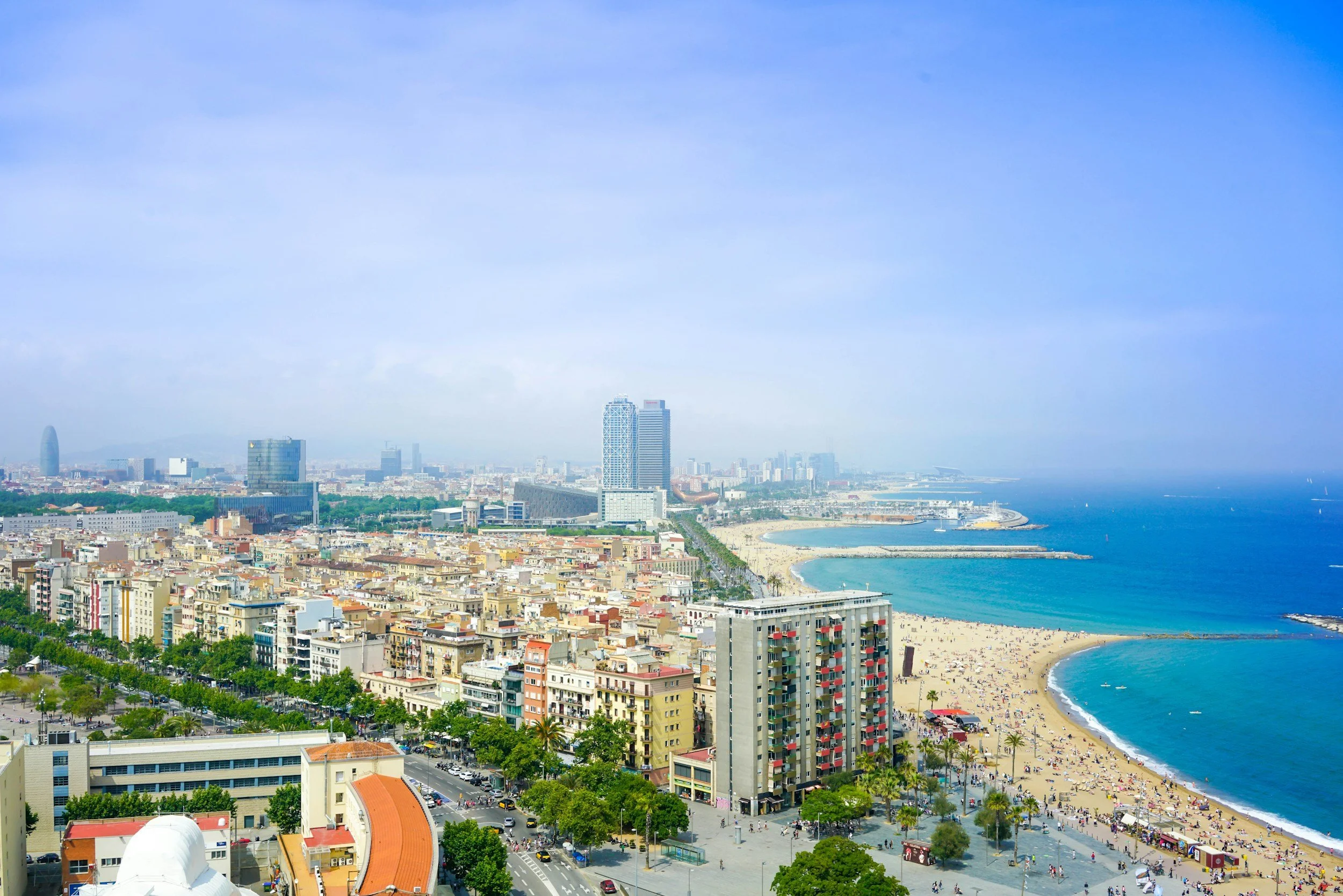
There's a version of Barcelona that exists in everyone's head before they move here.
It involves sun-drenched terraces, spontaneous flamenco, effortless friendships with locals, a beautiful apartment in the Gothic Quarter, and a life that looks suspiciously like a travel magazine spread. You know the one.
I've lived here for ten years. I love this city genuinely and deeply. And I also want to tell you the things that version leaves out — because if you're thinking about making the move, the gap between visiting Barcelona and actually living here is wider than most people expect, and knowing about it in advance makes all the difference.
The Bureaucracy Will Test You
Let's start with the thing nobody warns you about loudly enough: the paperwork is genuinely, spectacularly confusing.
Opening a bank account, getting your residency sorted, navigating the NIE (your Spanish identification number), renewing anything — all of it takes longer than it should, requires more documents than seems reasonable, and has a way of sending you in circles at exactly the moment you need things to move forward.
A few things that would have saved me significant time and stress:
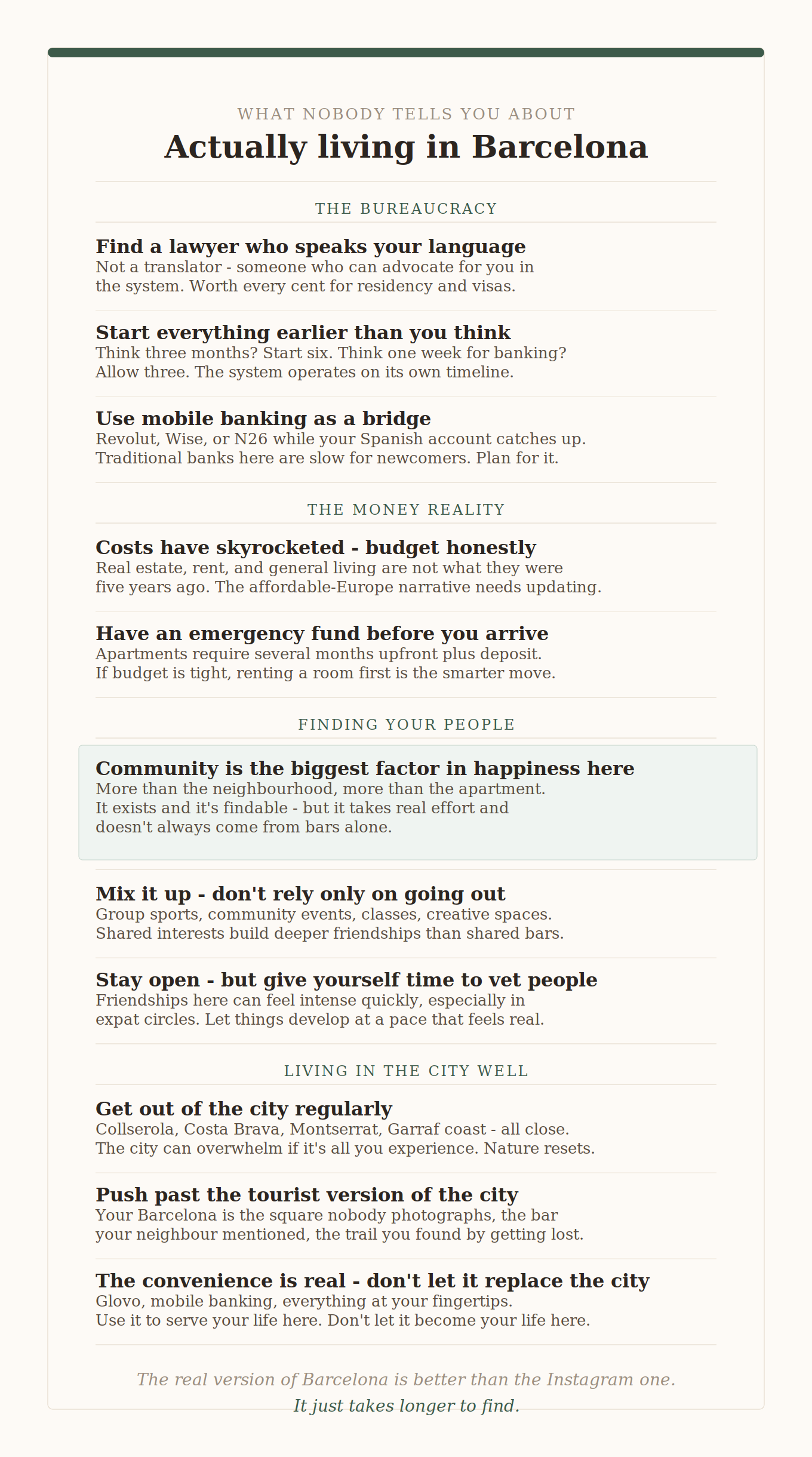
Find a lawyer who speaks your language. Not a translator — a lawyer who can actually advocate for you in the system, understands the specific bureaucratic landscape for your nationality, and can tell you what you actually need rather than what you think you need. This is worth every cent, especially for residency applications and anything passport or visa-related. The cost of getting it wrong — in time, in stress, in reapplications — is almost always higher than the cost of doing it right the first time.
Start everything earlier than you think you need to. If you think you need your residency sorted in three months, start six months out. If you think opening a bank account will take a week, allow three. The Spanish administrative system operates on its own timeline and it does not care about yours.
For banking, the traditional Spanish banks can be slow and document-heavy for newcomers. Many expats find it significantly easier to start with a mobile bank — Revolut and Wise are widely used here and let you get set up quickly while your Spanish banking situation catches up. N26 is another option. Use these as a bridge while you sort out a local account, which you'll eventually want for things like direct debits and rental contracts.
Nothing about this process is intuitive, and that's not a reflection of your intelligence or organisation. It is just genuinely complicated, and the sooner you accept that and build in extra time and professional support, the less it will derail you.
The Cost of Living Has Changed — A Lot
Barcelona is not the affordable European city it was five or ten years ago.
Real estate has skyrocketed. Rental prices have increased dramatically, particularly since the pandemic, and the pressure from tourism and short-term rentals has pushed long-term housing costs up significantly across almost every neighbourhood. What used to be a manageable budget for a nice apartment in Gràcia or Poblenou now requires considerably more — and the barrier to entry for apartments here is not low.
Most landlords will ask for several months of rent upfront plus a security deposit, often paid before you've even unpacked. You need to walk into this with real financial preparation — not just first month's rent, but a genuine emergency fund that can absorb the upfront costs of getting settled without leaving you immediately stretched.
If your budget is tight, renting a room is a completely legitimate first step — and honestly, for a lot of people, it's the smarter one. You get into the city, you learn the neighbourhoods from the inside, you figure out where you actually want to live before committing to a full lease, and you protect your finances while you get established. There's no shame in it. In fact, it's often how people end up in better apartments, because they had time to look properly rather than taking the first thing available.
General living costs have also risen — groceries, eating out, leisure. Barcelona still offers tremendous value compared to London or Paris, but the "cheap Mediterranean life" narrative needs some updating. Budget realistically.
The Convenience Is Real (For Better or Worse)
Here's the flip side of the cost conversation: Barcelona in 2026 is extraordinarily convenient in ways that didn't exist even five years ago.
Glovo delivers almost anything to your door within the hour. Mobile banking means you can manage your finances, send money internationally, and sort your accounts without setting foot in a branch. The city's infrastructure for daily life — transport apps, food delivery, online healthcare, digital bureaucracy where it exists — has genuinely transformed the experience of living here.
This is mostly wonderful. It also means the city can start to feel very small and very mediated if you're not careful — like you're consuming Barcelona through your phone rather than actually living in it. The convenience is real; just make sure it's serving your life here rather than replacing it.
Finding Community Is Everything — And It Takes More Effort Than You'd Think
This is the part I'd most want to tell my younger self, and the part I'd most want to tell anyone moving here now.
Finding your community is the single biggest factor in whether you're happy in Barcelona. More than the neighbourhood, more than the apartment, more than the weather. The people around you are the thing.
And the good news is: community here is genuinely findable. Barcelona is an international, open, creative city full of people who moved here from somewhere else and are actively looking for connection. It exists.
The harder truth is that it doesn't always come from where you expect. Going out constantly — bars, clubs, the social circuit — is not the reliable path to real friendship that it can feel like in the beginning. It produces a lot of acquaintances and not always a lot of depth.
What I've found works better:
Mix it up. Group sports, community events, classes, creative projects, local apps and communities built around shared interests rather than just shared proximity to a bar. These are the places where you meet people you actually have something in common with beyond being new to the city.
Get out of the city regularly. Barcelona is surrounded by extraordinary nature — mountains within an hour, beaches along the coast, small towns in every direction — and not using it is a mistake. The city can feel overwhelming and relentless if it's all you experience. Nature resets something. The Collserola hills, the Costa Brava, Montserrat, the Garraf coast — these are all close, accessible, and genuinely restorative in a way that a weekend of tapas and rooftops isn't.
Stay vulnerable and open — but also give yourself time to vet people. Barcelona has a particular phenomenon where friendships can feel very intense very quickly, especially in expat circles, and not all of those early connections go the distance. That's not cynicism; it's just the reality of a transient city where people come and go. Let things develop at a pace that feels real, and don't feel like you have to rush into a social group just because everyone around you seems to have one already.
The Touristy Version of the City Is Not Your City
If you're moving here, one of the most important things you can do in the first few months is push past the obvious.
The parts of Barcelona that visitors see — Las Ramblas, the Gothic Quarter, the Barceloneta strip, the most famous tapas bars — are real, they're beautiful, and they can also be genuinely overwhelming when they're your daily reality rather than a holiday highlight. The city has been significantly shaped by tourism and the pressure that comes with it, and living inside the tourist version of Barcelona gets old quickly.
Your Barcelona will be the neighbourhood market nobody photographs, the square where locals actually sit on a Tuesday evening, the bar your neighbour mentioned once, the hiking trail above the city that you found because you got slightly lost. It takes time to find, and it's worth looking for actively rather than waiting for it to appear.
Push yourself to explore beyond where everyone else is going. The city rewards it every time.
What I'd Tell Someone Packing Their Bags Right Now
Sort out your finances before you arrive — not just enough to get by, but enough to absorb the upfront costs of actually getting settled. Find a lawyer who speaks your language and can navigate the bureaucratic side with you. Start all your residency and paperwork earlier than feels necessary.
Expect costs to be higher than the internet told you. Rent a room if that's what makes financial sense at the start. Give yourself time to find your neighbourhood rather than committing to the first available apartment.
And then: go find your people. Not just at bars. In sports clubs and community events and hiking groups and creative spaces and places where people are doing things rather than just drinking next to each other.
Get out of the city regularly. Push past the tourist version. Stay open, stay curious, and give yourself more time than you think you need to feel at home here.
Because when it clicks — and it does click — Barcelona is one of the most extraordinary places in the world to build a life.
It just doesn't always look like the Instagram version. And that's okay. The real version is better.